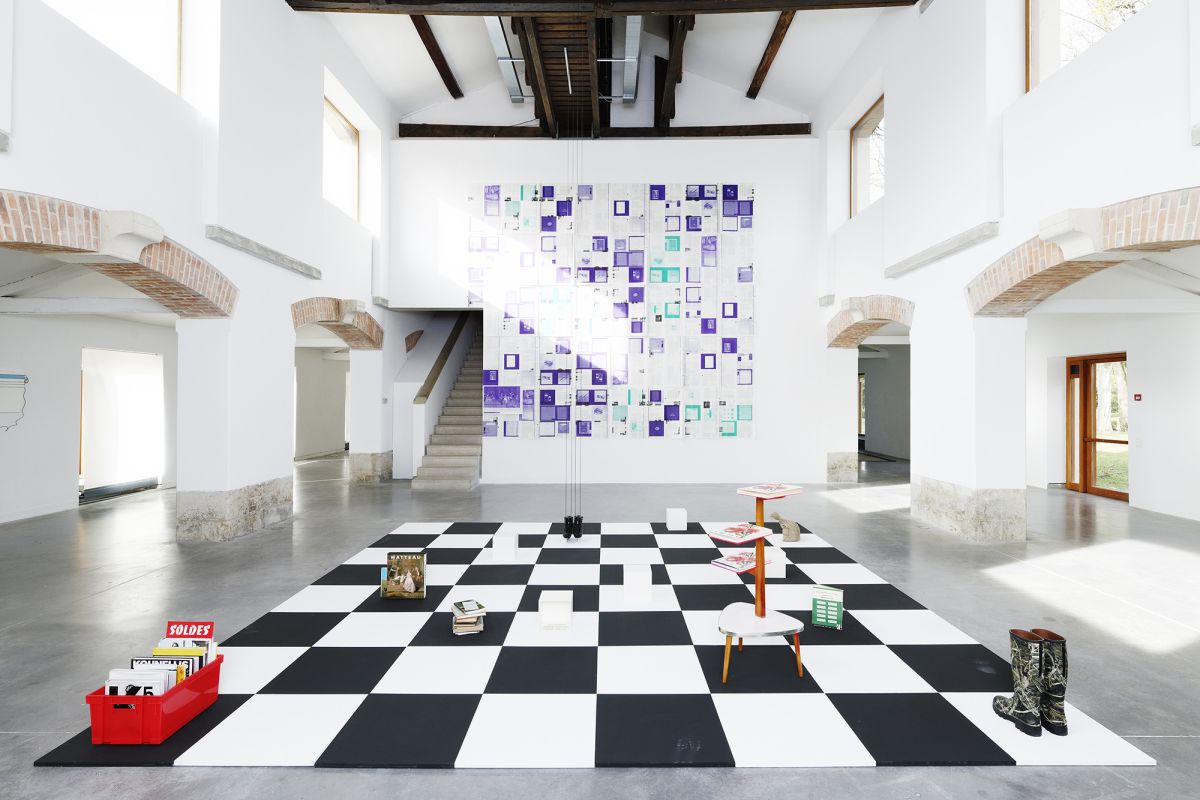
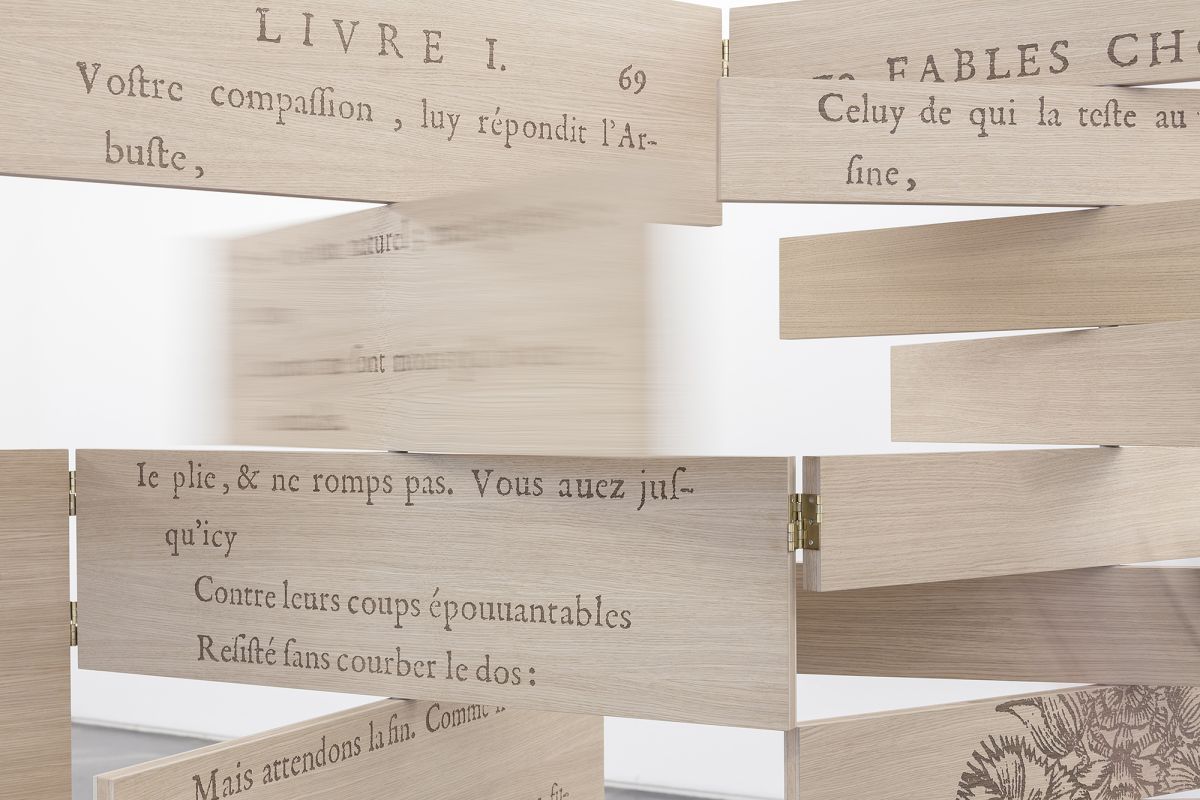
Centered on books, the library, and the archive, and most often inspired by chance discoveries, Yann Sérandour’s work has, from its inception, explored the phenomena of translation and reproduction at play in historical transmission, attentive to what shifts or is lost across periods, territories, and communities. Drawing on artifacts borrowed from predecessors, as well as accidents and chance occurrences, he conducts investigations, indexes gaps, unsettles certainties, and extends narratives that often follow winding paths From books to exhibitions and back again, his work initially engaged the “heroic” conceptual art of the late 1960s and 1970s, a largely North American and Western European […]
Centered on books, the library, and the archive, and most often inspired by chance discoveries, Yann Sérandour’s work has, from its inception, explored the phenomena of translation and reproduction at play in historical transmission, attentive to what shifts or is lost across periods, territories, and communities. Drawing on artifacts borrowed from predecessors, as well as accidents and chance occurrences, he conducts investigations, indexes gaps, unsettles certainties, and extends narratives that often follow winding paths
From books to exhibitions and back again, his work initially engaged the “heroic” conceptual art of the late 1960s and 1970s, a largely North American and Western European canon, working from its margins. That period particularly speaks to him for having been widely disseminated in the form of publications and printed materials, his medium of choice. In his later work, he has been able to freely shift his focus to other fields and more distant eras, exploring subjects as varied as the trade in antique mirrors, the domestic cultivation of cacti, the standardization of dog breeds, and the musical revival of the harpsichord, whose histories he reinterprets and freely interconnects.